
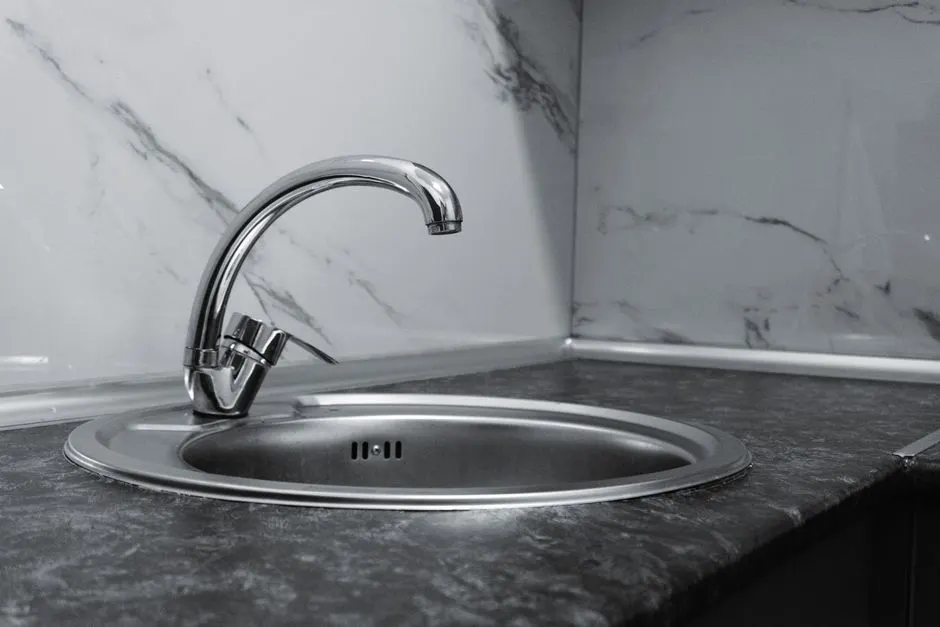
You can unclog a kitchen sink drain without chemicals by first removing standing water, then using a plunger or a baking soda and vinegar mixture to break up the clog, and finally running a manual drain snake through the trap arm if the blockage persists. These methods work on the grease, food particles, and soap scum that cause most kitchen clogs in Bowie homes. This guide walks you through each step, explains why chemical cleaners often make things worse, and tells you when it's time to call a professional.
Why chemical drain cleaners are a bad idea
Chemical drain cleaners are a bad idea because they can damage your pipes, harm your health, and fail to clear the root cause of the clog. Most store-bought cleaners rely on sodium hydroxide or sulfuric acid. These caustic substances generate heat as they dissolve organic matter, and that heat can soften PVC joints or accelerate corrosion in older metal pipes. In Bowie, many homes built in the 1960s through the 1980s still have original cast-iron or galvanized steel drain lines under the kitchen. Those pipes are already thinning. A strong chemical cleaner can eat through the scale and leave you with a pinhole leak inside a cabinet.
There's also the safety factor. Splashback from a chemical cleaner can burn skin and eyes, and the fumes are harsh in a small kitchen. If the clog doesn't clear, you're left with a sink full of caustic liquid that you now have to bail out by hand before you can try anything else. That's a miserable job. And if you eventually call us, we have to work around that chemical hazard. We'd rather you skip it entirely.
Finally, chemical cleaners rarely solve the real problem. Kitchen clogs are usually a plug of grease and food solids lodged in the P-trap or the horizontal run of pipe behind the sink. A chemical may punch a small channel through the middle, letting water drain slowly for a few days. Then the plug re-forms. Mechanical removal is more reliable, and it's what we do every day for drain cleaning Bowie MD customers.
What you need before you start
Before you start, gather a few basic tools and clear the area under the sink. You don't need a full plumbing kit. A cup plunger, a bucket, some rags, and a manual drain snake will handle most kitchen clogs. Here's the short list:
- A cup plunger (the kind with a flat bottom, not a flange plunger for toilets)
- A bucket or large bowl to catch water
- An adjustable wrench or slip-joint pliers for the P-trap
- A manual drain snake (also called a hand auger), 15 to 25 feet long
- Baking soda and white vinegar
- Boiling water (use caution with PVC pipes)
- Rubber gloves and safety glasses
If your sink has a garbage disposal, make sure it's switched off at the wall or breaker before you reach into the drain area. Never put your hand into a disposal opening, even with the power off. Use pliers or tongs to remove debris.
Method 1: The baking soda and vinegar approach
The baking soda and vinegar approach works best on light clogs caused by grease or soap scum. It won't dissolve a solid plug of food waste, but it's a safe first step that costs pennies. Start by removing as much standing water as you can with a cup or a turkey baster. Pour half a cup of baking soda directly into the drain, followed by one cup of white vinegar. The mixture will fizz and bubble. That reaction is mechanical agitation, and it can loosen gunk clinging to the pipe walls.
Let it sit for 15 to 30 minutes. Then flush the drain with a pot of boiling water. If the water drains slowly, repeat the process once. Don't use boiling water if you have PVC pipes under the sink; use hot tap water instead. PVC can soften at temperatures above 140°F, and boiling water is 212°F. Most Bowie homes have PVC traps, so hot tap water is the safer choice. This method is the go-to Plumber Bowie MD in Pointer Ridge technicians recommend for routine maintenance because it's gentle on pipes and safe for septic systems.
Method 2: Plunging the sink
Plunging the sink creates pressure that can dislodge a soft clog in the P-trap or the drain line. Fill the sink with about 3 inches of water. If you have a double sink, seal the other drain with a wet rag or a stopper so the pressure goes toward the clog. Place the cup plunger over the drain and push down firmly to create a seal. Then plunge vigorously 10 to 15 times. Pull up sharply on the last stroke to break the seal and help pull debris loose.
You should hear a gurgle or see the water drain. If nothing happens after two rounds of plunging, the clog is likely further down the line or is a solid obstruction. That's when you move to the drain snake. Plunging is safe for most pipes, but don't plunge if you've already poured chemical cleaner into the drain. The pressure can splash caustic liquid back at you.
Method 3: The drain snake (manual auger)
The drain snake, or manual auger, is the most effective tool for kitchen clogs that resist plunging. A 15- to 25-foot hand auger costs $20 to $40 at a hardware store and will last for years. To use it, first remove the P-trap. Place the bucket under the trap, unscrew the slip nuts by hand or with pliers, and pull the trap off. Dump the contents into the bucket. You'll likely see a greasy, smelly mess. That's the clog.
Feed the snake into the pipe that goes into the wall, not the one coming from the sink. Crank the handle clockwise as you push. When you feel resistance, you've hit the clog. Keep cranking and pushing until the snake breaks through. Then pull the snake out slowly, wiping it with a rag as it comes. Reassemble the P-trap, run hot water for a minute, and check for leaks around the slip nuts. If the drain still runs slow, the clog may be in the main line, which is a job for a professional.
How to unclog a garbage disposal drain
A clogged garbage disposal drain usually means food waste has packed into the discharge tube or the P-trap below it. First, turn off the power to the disposal at the breaker. Then check the reset button on the bottom of the unit; if it has tripped, push it back in. If the disposal hums but doesn't spin, the flywheel is jammed. Insert a 1/4-inch Allen wrench into the hex hole on the bottom of the unit and work it back and forth to free the flywheel. Never use your hand.
If the disposal spins freely but the sink drains slowly, the clog is in the trap or the drain line. Use the plunging method with the disposal off, or remove the P-trap and snake the line. For persistent problems, our garbage disposal repair Bowie MD team can clear the line and check the disposal's condition. We see this often in homes around Plumber Bowie MD in Belair at Bowie, where original disposals from the 1990s are still in service and prone to jammed flywheels.
Common mistakes to avoid
The most common mistake is reaching for chemical cleaner first. It's tempting because it's easy, but it damages pipes and creates a hazardous mess if it fails. Other mistakes we see frequently:
- Pouring grease down the drain. Grease cools and solidifies inside the pipe. Wipe pans with a paper towel before washing.
- Using too much boiling water on PVC. Hot tap water is safer for plastic traps.
- Forcing the snake. If the snake won't go, don't crank harder. You can kink the cable or damage the pipe.
- Ignoring a slow drain. A slow drain is a warning. Clear it before it becomes a full blockage.
- Putting fibrous foods down the disposal. Celery, onion skins, and potato peels wrap around the blades.
If you've tried these methods and the drain still backs up, the problem may be in the main sewer line. Tree roots, collapsed pipe, or heavy grease buildup in the main line require a camera inspection and professional equipment. We handle that for sewer line repair Bowie MD customers regularly, especially in older neighborhoods with mature trees.
When to call a professional
Call a professional when you've tried plunging and snaking and the drain still won't clear, or when you notice water backing up in other fixtures. A kitchen sink that gurgles when you run the washing machine or flush a toilet points to a main line clog, not a local one. Repeated clogs in the same spot also signal a deeper issue, such as a bellied pipe or heavy scale buildup.
We're Plumber Bowie MD residents call for drain problems because we have the equipment to clear the line without harsh chemicals. Our technicians use motorized augers and cameras to find the clog and remove it completely. If you're in Plumber Bowie MD in Old Bowie, where many homes have older cast-iron drains, we can assess the pipe condition and recommend the right fix.
Frequently Asked Questions
How do I unclog a kitchen sink without chemicals in Bowie MD?
Remove standing water, then plunge the drain with a cup plunger. If that fails, pour half a cup of baking soda and one cup of vinegar, let it sit 15-30 minutes, and flush with hot tap water. For stubborn clogs, remove the P-trap and snake the line with a manual auger.
What is the best natural drain cleaner in Bowie Maryland?
Baking soda and vinegar is the most effective natural cleaner for routine kitchen clogs. For grease, a mixture of hot water and dish soap can help. Avoid relying on any single natural cleaner for a solid blockage; mechanical removal with a plunger or snake is more reliable.
Can I use baking soda and vinegar to unclog a drain in Bowie MD?
Yes, baking soda and vinegar is safe for most pipes and works well on light clogs caused by grease or soap scum. It won't clear a solid food plug. Use hot tap water, not boiling, if you have PVC pipes. Repeat the process if the drain is still slow.
When should I call a plumber for a clogged drain in Bowie MD?
Call a plumber if the drain backs up after two attempts with a plunger or snake, if multiple fixtures drain slowly, or if you see water backing up in the basement or yard. These signs point to a main line clog that requires professional equipment.
Get help with Plumber Bowie MD in Bowie
If your kitchen sink won't clear after trying these methods, our team at Plumber Bowie is ready to help. We'll diagnose the clog, clear it without harsh chemicals, and make sure your drain flows freely. Call us at +1 (831) 293-1204 to schedule service in Bowie.